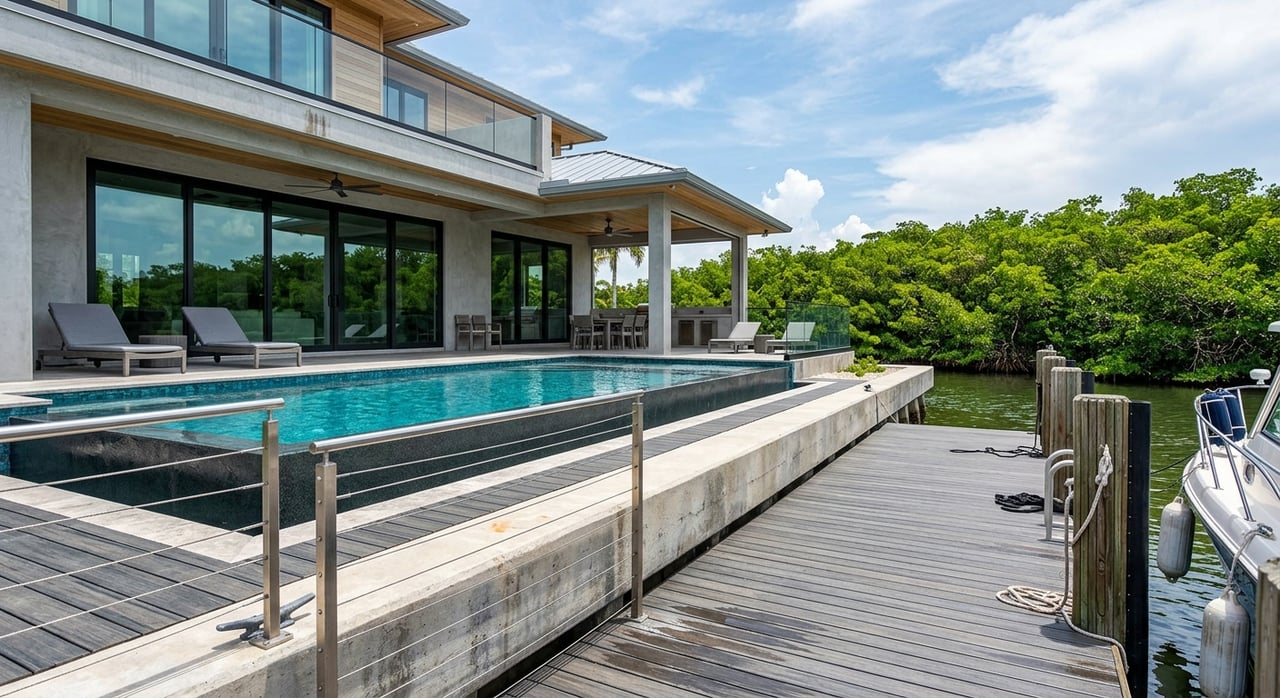
If you picture waterfront living in Melbourne as one simple category, think again. In this part of Brevard County, “waterfront” can mean anything from a condo with water views to a canal-front home with boating access or a direct lagoon-front property with wide-open scenery. If you are thinking about buying near the water, understanding those differences can help you avoid surprises and make a smarter choice. Let’s dive in.
What waterfront means in Melbourne
Melbourne’s geography shapes the local waterfront market in a big way. The city sits along the Indian River Lagoon and includes both mainland and barrier-island areas, so waterfront inventory is more varied than many buyers expect.
That means your options may include lagoon-front, riverfront, canal-adjacent, or attached homes and condos near the water. Two listings can both be labeled “waterfront” while offering very different views, access, maintenance needs, and pricing.
For that reason, it helps to define what matters most to you early. You may care most about direct water frontage, a private dock, easy launch access, lower maintenance, or simply having a water view from your balcony.
Why buyers love waterfront living
For many buyers, the appeal goes beyond the view. Melbourne offers strong public access to the water, which supports a lifestyle centered on boating, paddling, fishing, and spending time outdoors.
The City of Melbourne lists public boat launches at Ballard Park, Claude Edge Front St. Park, Horse Creek Park for non-motorized access, and Riverview Park for non-motorized access. The city also lists fishing piers at Claude Edge Front St. Park and Eau Gallie Pier.
Brevard County adds nearby public launch options such as the Eau Gallie Causeway Boat Ramp and P.O.W. / M.I.A. Park. If you want to be on the water often, access points like these can shape which neighborhood feels most convenient for your routine.
Fishing is also part of the draw. The Florida Fish and Wildlife Conservation Commission identifies Brevard County fishing areas such as the Banana River, Merritt Island National Wildlife Refuge, Jetty Park, Sebastian Inlet State Park, and South Mosquito Lagoon, with common inshore species including red drum, snook, spotted seatrout, tarpon, cobia, and sheepshead.
Compare access, not just views
A great view does not always equal great usability. One of the smartest things you can do as a buyer is compare the type of access a property gives you, not just the photos.
Ask whether the home has direct frontage, canal access, or shared community access. You should also find out whether the access works for motorized boats, kayaks and paddleboards only, or mostly for enjoying the scenery.
This matters because public and private access points can be affected by weather, water levels, and maintenance. Melbourne has noted that high water levels have repeatedly put Front Street boat docks under water, leading to dock replacement and shoreline hardening work.
That is a useful reminder that waterfront living is dynamic. Conditions can shift with tides, flooding, erosion, and repair cycles, so practical access deserves just as much attention as aesthetics.
Property features worth a closer look
In Melbourne, waterfront homes come in many forms and price points. Current waterfront inventory has included condos, townhomes, foreclosures, and detached homes, with asking prices ranging from about $153,000 to $1.98 million.
That range tells you something important. A lower-priced waterfront property may be a condo near the water or with limited direct access, while a higher-priced home may offer broader frontage, a dock, and more usable outdoor space.
When you tour properties, pay close attention to the features that affect day-to-day ownership:
- Dock usability
- Water depth and navigability
- Shoreline condition
- Seawall or shoreline stabilization features
- Whether access is motorized or non-motorized
- HOA responsibilities, if the property is a condo or townhome
Shoreline condition deserves extra attention. The city’s own waterfront infrastructure projects include shoreline hardening for erosion control, which shows how important long-term maintenance can be near the water.
Flood zones and insurance matter early
If you are buying waterfront in Melbourne, insurance should not be an afterthought. The Florida Office of Insurance Regulation says flood coverage is not typically included in a homeowners policy and may be required by a mortgage lender depending on the property’s location.
That means a home can look financially comfortable at first glance, then become more expensive once flood coverage and storm-related costs are added. It is best to ask about insurance early in your search, not after you have emotionally committed to a home.
Florida consumer guidance also notes that flood policies often have a 30-day waiting period before they take effect, with certain exceptions such as some loan closings and map changes. In simple terms, waiting too long can limit your options and add stress to your timeline.
You should also know that coverage has limits. Florida guidance notes that NFIP coverage generally does not cover piers, seawalls, docks, or boathouses on or over water, and it does not provide additional living expense coverage.
That is a big detail for waterfront buyers. Even if the home itself is insured, shoreline structures and temporary housing costs may still be your responsibility after flood damage.
Understand Florida hurricane deductibles
Florida also handles hurricane deductibles differently than many buyers expect. State guidance says insurers must offer hurricane deductibles of $500, 2 percent, 5 percent, or 10 percent of dwelling or structure limits.
Because these deductibles are tied to the insured value of the home, the out-of-pocket cost after a storm can be much higher than a standard deductible. On a waterfront property, that difference can materially affect your comfort level and budget.
This is one reason it helps to compare total ownership cost, not just the mortgage payment. A property that fits your price range on paper may feel very different once flood insurance, wind coverage, and potential storm deductibles are factored in.
Check floodplain details before you offer
Brevard County’s floodplain office is the official local source for FEMA flood maps and serves as the county liaison for floodplain development and mitigation. The county also notes that local flooding can result from heavy rainfall, tidal surges, tropical storms, hurricanes, and the Indian River Lagoon system.
Before you make an offer, it is wise to check the property’s flood zone and ask whether an elevation certificate is available. These details can help you better understand insurance needs, lender requirements, and future ownership costs.
This step is especially important when you are comparing two homes that seem similar online. Small differences in elevation, frontage, and location can affect both risk profile and monthly cost.
Waterfront pricing is highly specific
One of the most common buyer questions is whether waterfront in Melbourne always comes with a major premium. The answer is more nuanced than that.
At the city level, Melbourne’s overall housing market sits roughly in the low-to-mid $300,000s depending on the source. Redfin reported a median sale price of about $312,500 in March 2026, Zillow reported an average home value of $356,354, and Realtor.com reported a median listing price near $365,000.
At the same time, Redfin’s waterfront search showed 172 waterfront homes with a median listing price of $315,000. That does not mean direct waterfront homes are priced like standard inland homes. It means the waterfront category includes a broad mix of condos, attached homes, and properties with different levels of frontage and access.
That is why broad averages can be misleading. A direct lagoon-front home, a canal-front property, and a condo with water views may all sit in the same search results while carrying very different value drivers.
A useful contrast is nearby Melbourne Beach. Florida Realtors’ Q2 2024 MLS report showed a median sale price of $940,000 there versus $330,000 in Melbourne city for single-family homes, highlighting how coastal and waterfront-heavy submarkets can price far above the mainland core.
The takeaway is simple: compare similar frontage types, similar access, and similar property styles. Looking only at citywide medians can lead you off track.
Questions to ask on every tour
When you walk a waterfront property in Melbourne, try to think like both a homeowner and a long-term steward of the site. A beautiful lot can still come with questions that deserve clear answers.
Bring these questions with you:
- What kind of waterfront is this, exactly?
- Is the frontage direct, shared, canal-based, or view-only?
- Is there a dock, lift, seawall, or shoreline protection feature?
- What condition are those features in today?
- Is water access suitable for motorized boats or only non-motorized use?
- Is the property in a flood zone, and is an elevation certificate available?
- What flood and wind insurance costs should you expect?
- If this is a condo or townhome, who maintains waterfront structures?
- Which nearby public ramps, piers, or parks support your lifestyle?
These questions can help you move beyond the listing description and evaluate how the home will actually live.
Waterfront living works best with local context
Buying waterfront in Melbourne is not just about finding a home near the water. It is about matching your budget, lifestyle, and comfort with maintenance and insurance to the right kind of waterfront opportunity.
Some buyers want direct boating access and private shoreline features. Others want the look and feel of waterfront living with lower upkeep through a condo or attached home. Both can be smart choices when you understand the tradeoffs.
The key is having local guidance that helps you compare properties clearly, ask the right questions, and look beyond the headline price. If you are exploring waterfront homes in Melbourne, Pamela Ann Reynolds can help you evaluate your options with a practical, neighborhood-level approach.
FAQs
What counts as waterfront property in Melbourne, Florida?
- In Melbourne, waterfront can include lagoon-front, riverfront, canal-adjacent, and some condo or attached homes with water access or water views.
What should buyers know about flood insurance for Melbourne waterfront homes?
- Flood insurance is not typically included in a standard homeowners policy, may be required by a lender depending on location, and often has a 30-day waiting period unless a specific exception applies.
What waterfront features should buyers inspect in Melbourne homes?
- Buyers should look closely at dock usability, shoreline condition, seawalls or stabilization features, and whether the property supports motorized or non-motorized water access.
How do hurricane deductibles affect Melbourne waterfront buyers?
- Florida hurricane deductibles can be $500, 2 percent, 5 percent, or 10 percent of the dwelling or structure limit, which can create higher out-of-pocket costs after a storm than many buyers expect.
Are all waterfront homes in Melbourne expensive?
- No. Melbourne waterfront listings can range from lower-priced condos and attached homes to high-end direct-frontage properties, so pricing depends heavily on frontage type, access, and property style.
Where can buyers find public water access in Melbourne, Florida?
- Melbourne lists public launches at Ballard Park, Claude Edge Front St. Park, Horse Creek Park, and Riverview Park, along with fishing piers at Claude Edge Front St. Park and Eau Gallie Pier, plus additional nearby county launch options.