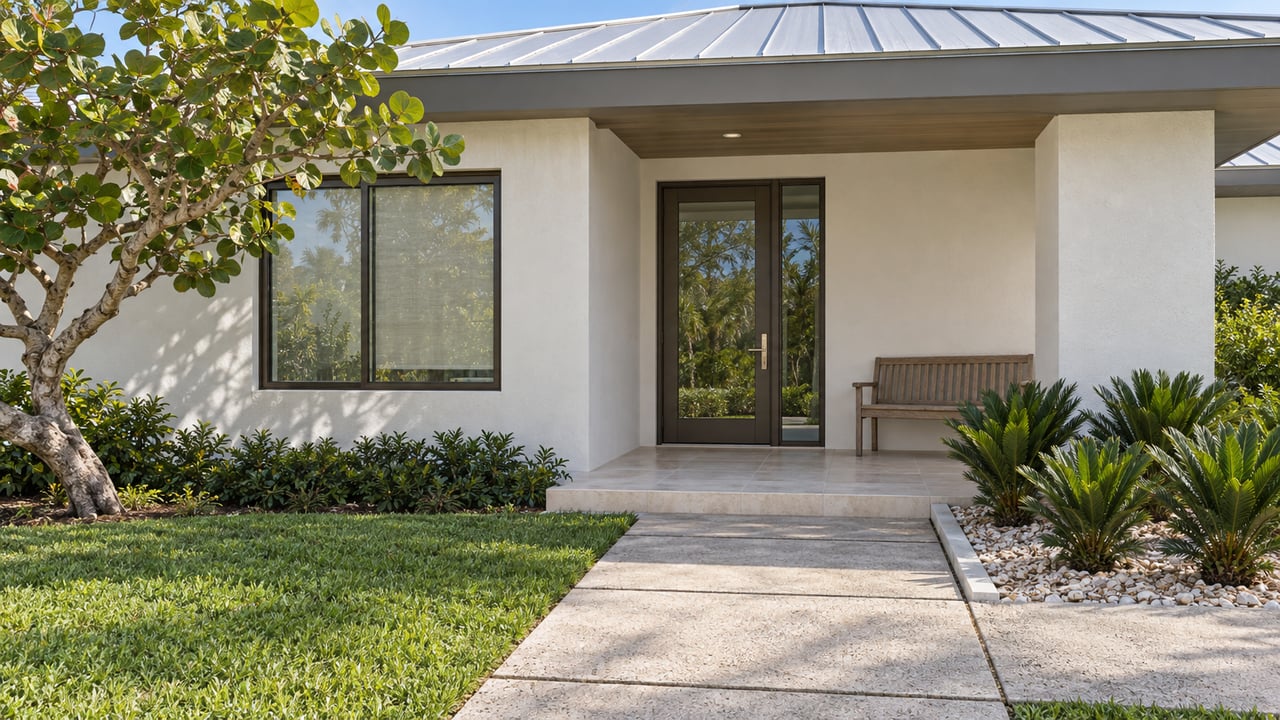
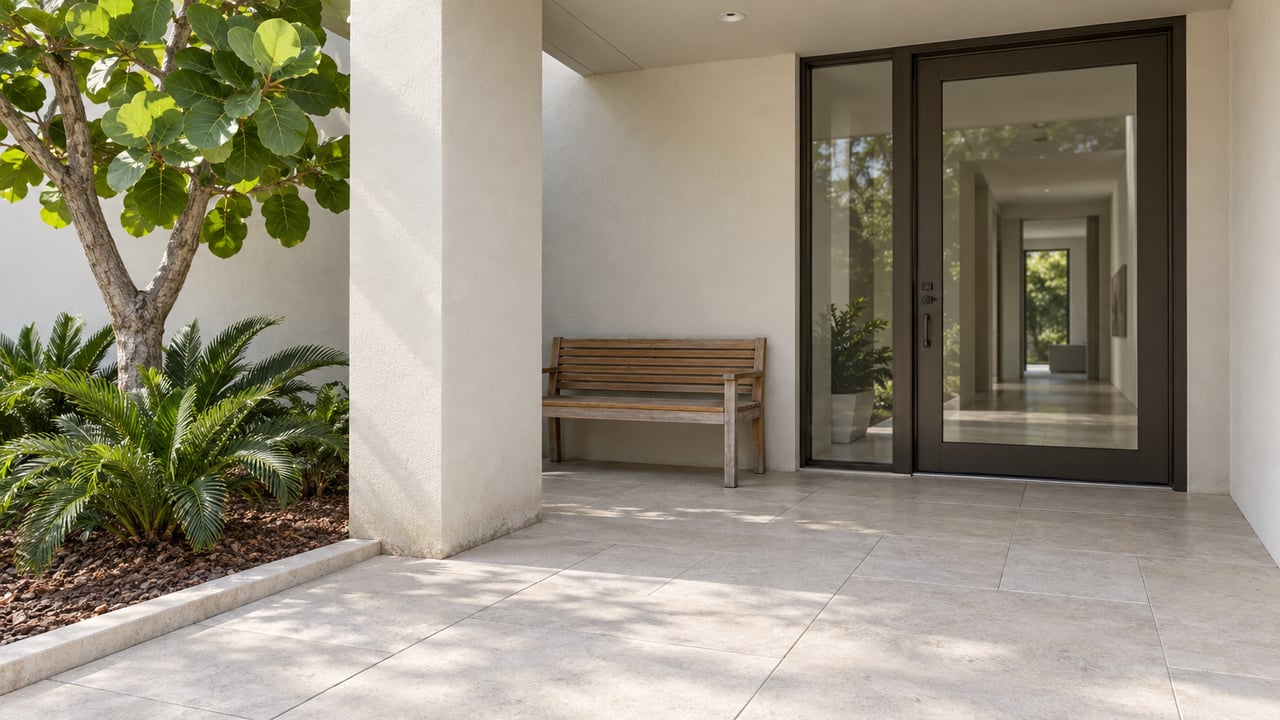
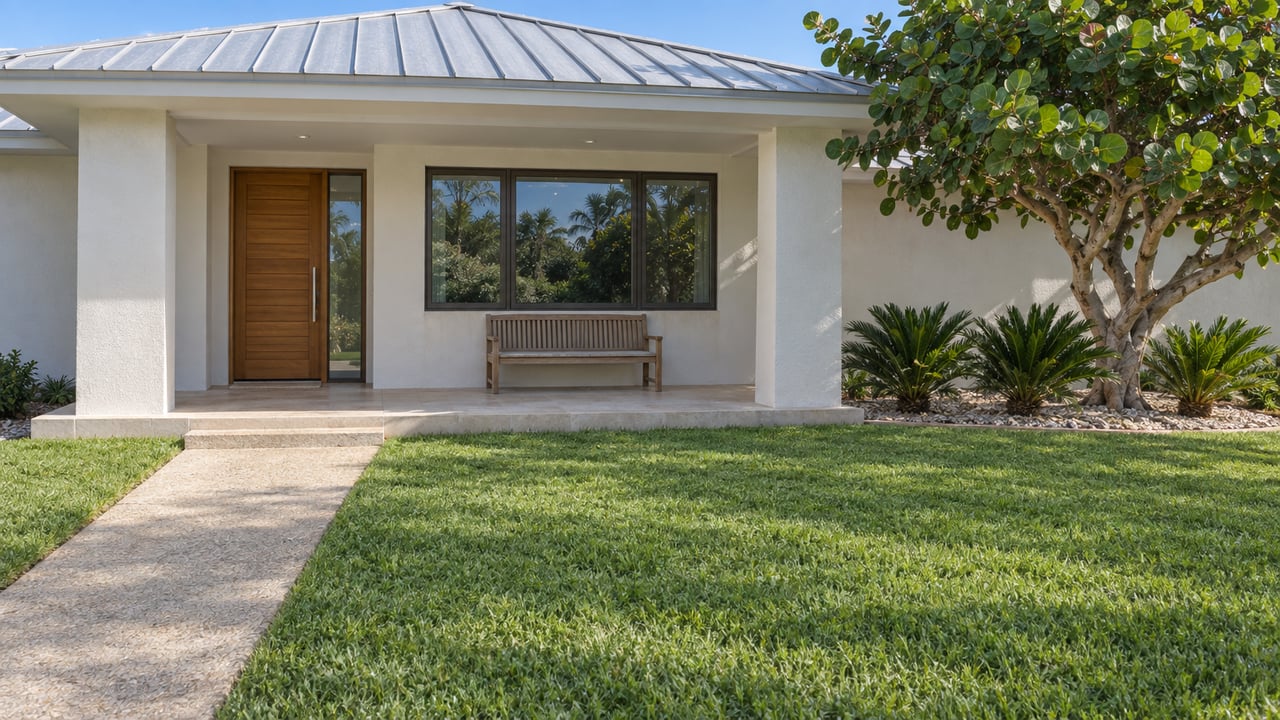
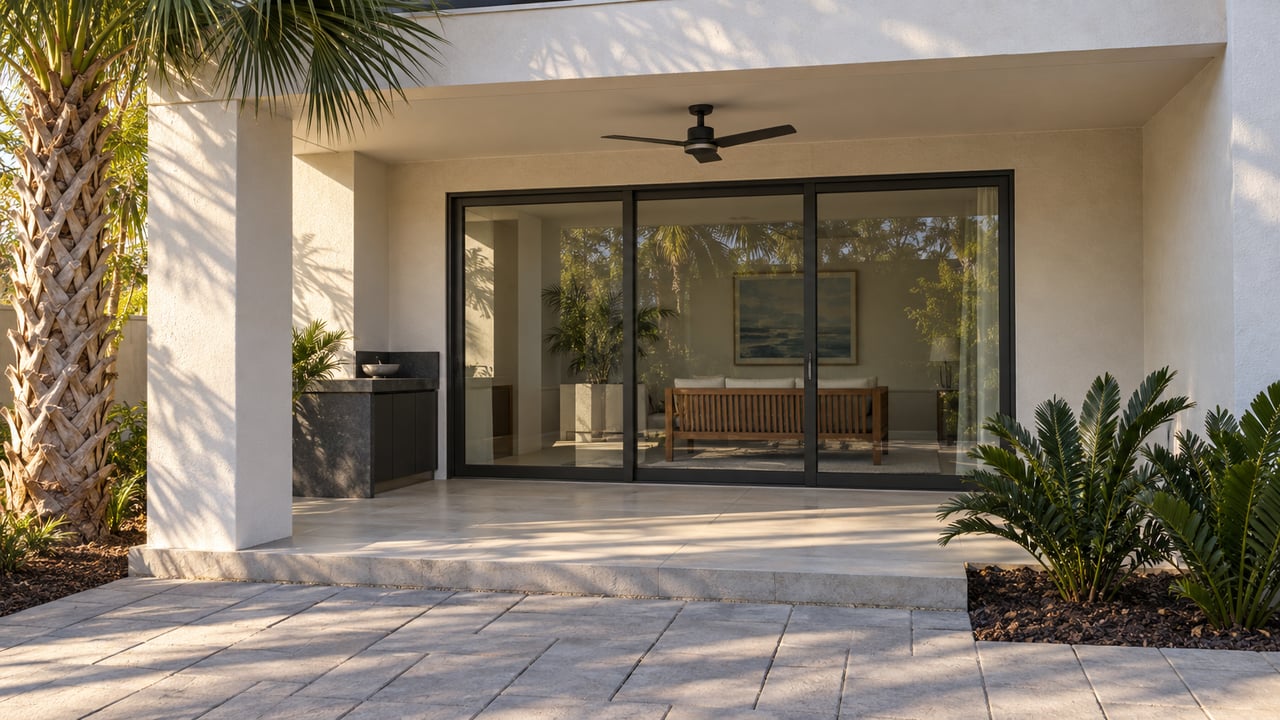
Two homes list within a few thousand dollars of each other. Both are 2-bedroom, 2-bath manufactured homes in Melbourne. Both show up in the same search results with the same square footage and the same "move-in ready" language. One sits in Twin Lakes of Melbourne, a 55+ community where the listing says plainly: you own the land. The other sits in Tropical Haven, where a similar-sized single-wide comes with lot rent of roughly $700 a month.
On paper, these look like the same purchase decision with a different zip code detail. They are not. The moment you sign for one over the other, you're choosing a different loan product, a different interest rate, a different insurance conversation, and a different answer to the question of whether your home will be worth more or less in ten years. None of that shows up in the listing price. All of it shows up on your closing statement and, eventually, your net worth.
Same Price, Different Deed
The distinction that does all the work here is whether you own the ground under the home or lease it from a park owner. It sounds like a footnote. It is closer to the whole ballgame.
Communities like Twin Lakes of Melbourne and Hollywood Estates in West Melbourne market themselves on this point directly, because it's a selling feature: no lot rent, you own the land, and in Hollywood Estates' case a modest HOA fee (listings put it around $125 a month) covers the clubhouse and pool instead of a monthly land payment. When a home sits on land the buyer owns and is permanently affixed to a foundation, that ownership distinction can matter financially.
On the other side of the ledger sit communities built on the land-lease model, which is the industry default for anything marketed as a "manufactured home community" or "mobile home park" rather than a subdivision. Tropical Haven, Mobiland by the Sea, Lakewood Village, The Meadows, and Pine Lake Estates all operate this way in Melbourne and the surrounding area. You buy the home. You pay rent on the ground it sits on.
Tropical Haven leans into its location in its own marketing, pointing to the Eau Gallie Arts District, the Brevard Zoo, and downtown Melbourne as reasons to live there. That's a fine pitch for lifestyle. It has nothing to do with what determines your loan terms or your resale math, which is the land underneath, not the neighborhood around it.
The Loan You Qualify For Depends On What You're Buying
Here's where the distinction stops being academic. The financing path differs between a home on owned land and one on a leased lot.
The rate gap between these two products is not small. As of mid-2026, average rates run close to 6.81% for a manufactured home mortgage against roughly 8.69% for a chattel loan, based on Federal Reserve data reported this year. Chattel loans also typically cap out around 15 to 20 years instead of 30, and credit score minimums can run as low as the mid-500s, which is part of why they're accessible to buyers who might not qualify for a mortgage. Accessible and cheap are two different things.
Run a representative loan amount through both structures and the gap shows up fast. Take $110,000, a reasonable stand-in for the newer manufactured homes currently listed around Melbourne. Financed as a chattel loan at roughly 8.69% over 20 years, principal and interest come to about $970 a month. Financed as a 30-year mortgage at roughly 6.81%, the same $110,000 runs closer to $720 a month. That's a $250 monthly gap on the exact same loan amount, driven entirely by what kind of paper you signed.
Add The Lot Rent Back In
The chattel loan number above doesn't include what you're paying to occupy the ground. Add Tropical Haven's roughly $700 a month in lot rent to that $970 chattel payment and you're looking at close to $1,670 a month in housing cost before insurance, taxes on the home itself, or maintenance.
Compare that to a buyer in Hollywood Estates or Twin Lakes of Melbourne financing a comparable home with a mortgage. Their $720 payment plus a $125 HOA fee lands around $845 a month. Same home style, same general price range, and the land-owned buyer is carrying about half the monthly cost of the land-lease buyer, largely because they're not paying rent on top of a loan and their loan itself is cheaper to service.
These are illustrative figures built from the average rates above and current Melbourne-area list prices, not a quote for any specific address. The point isn't the exact dollar amount. It's that lot rent and loan type stack on top of each other, and the stacking effect is invisible until you build the math yourself.
Insurance Draws The Same Line
The land-owned versus land-lease split doesn't stop at financing. It follows you into the insurance market too. Homes on owned land with a permanent foundation are generally easier and cheaper to insure than homes on rented park lots, where some carriers restrict coverage or add exclusions.
Age matters here as much as land status. Florida draws a hard line at June 15, 1976, the date the federal HUD Code took effect, as Bridgeway Insurance explains. Many Florida insurers either decline to cover homes built before that date or charge 50 to 100 percent more than they would for a newer home. According to 1800Insurance, Florida requires anchoring and tie-down systems under state administrative rule. A documented wind mitigation inspection, typically $75 to $150, can shave 10 to 45 percent off a windstorm premium depending on what it finds. None of this is optional paperwork. Many insurers won't issue or renew a policy without proof the anchoring is current.
If you're comparing a 1998 single-wide on leased land in one park against a newer double-wide on owned land in another, you're not just comparing two homes. You're comparing two different insurance markets and two different sets of carriers willing to write the policy at all. You can read the state's own guidance on wind mitigation discounts through the Florida Office of Insurance Regulation if you want to see the mechanics for yourself.
What Happens When You Sell
This is where the land-owned versus land-lease split shows its full weight. A manufactured home permanently affixed to land you own can appreciate alongside the land it sits on.
A home on leased land carries more uncertainty. It can be more exposed to the kind of depreciation curve you'd expect from a vehicle, particularly as it ages. That doesn't mean every land-lease home loses value. A well-kept double-wide in a desirable, well-managed 55+ park can still sell for more than its original purchase price, especially when the surrounding market for site-built homes has gotten expensive enough to make the park look like a bargain by comparison. But the ceiling and the floor are both less predictable, because your home's value is tied to the park's reputation and lease terms as much as to the structure itself.
For a 20-year-old manufactured home, that difference can be the gap between a $15,000 to $50,000 sale in a park and a meaningfully higher number on owned land, where the land itself is doing a lot of the pricing.
A Few Questions Before You Tour A Community
Does land-lease automatically mean the home will lose value? No, but it removes the automatic tailwind that land ownership provides. Condition, upgrades, and the desirability of the specific community matter more when you're on leased land, because the land itself isn't appreciating on your behalf.
Why does the 1976 construction date keep coming up? That's the cutoff for HUD Code compliance, and it affects financing and insurance regardless of who owns the land. A pre-1976 mobile home on owned land can still be harder and more expensive to insure than a 1990s manufactured home on leased land, so the age question and the land question need to be answered separately, not assumed to move together.
If you're weighing a manufactured home purchase in Melbourne and want to walk through which communities fit which financing path, Pamela Ann Reynolds can help you compare the real numbers before you fall for a listing photo. Get Your Free Market Estimate and we'll run the math on the specific community you're considering.
This article is general information, not legal, tax or financial advice. Consult a qualified professional about your situation.